High altitude
ALTITUDEWorking conditions & equipment performance
Qinghai, China · A record of people and place
Six conditions shape the design. Three perspectives bring the everyday needs into focus.
Working conditions & equipment performance
Frozen pipes, water seals & equipment
Limited flushing, cleaning & water supply
Excavation, foundations & seasonal changes
Higher costs for centralized pipe networks
Data transmission & emergency contact

Most village toilets are still dry latrines, and upgrades remain uneven. Water is scarce, so residents are reluctant to use even newly built flush toilets.
How should the budget be allocated, and can limited investment meet actual needs?

Privacy needs protection. Cleaning and maintenance require considerable effort and dedicated public-service staff; emptying the pits is also difficult.
Long winters can cause pipes to burst, so the school needs a dedicated team to carry out routine maintenance and repairs.

Villages are scattered. Moving materials, equipment and workers requires longer journeys and more time.
Strong sunshine, large day-night temperature swings and low temperatures put water systems at risk of freezing. Existing pipes need deep burial and routes near heat sources to prevent freezing.
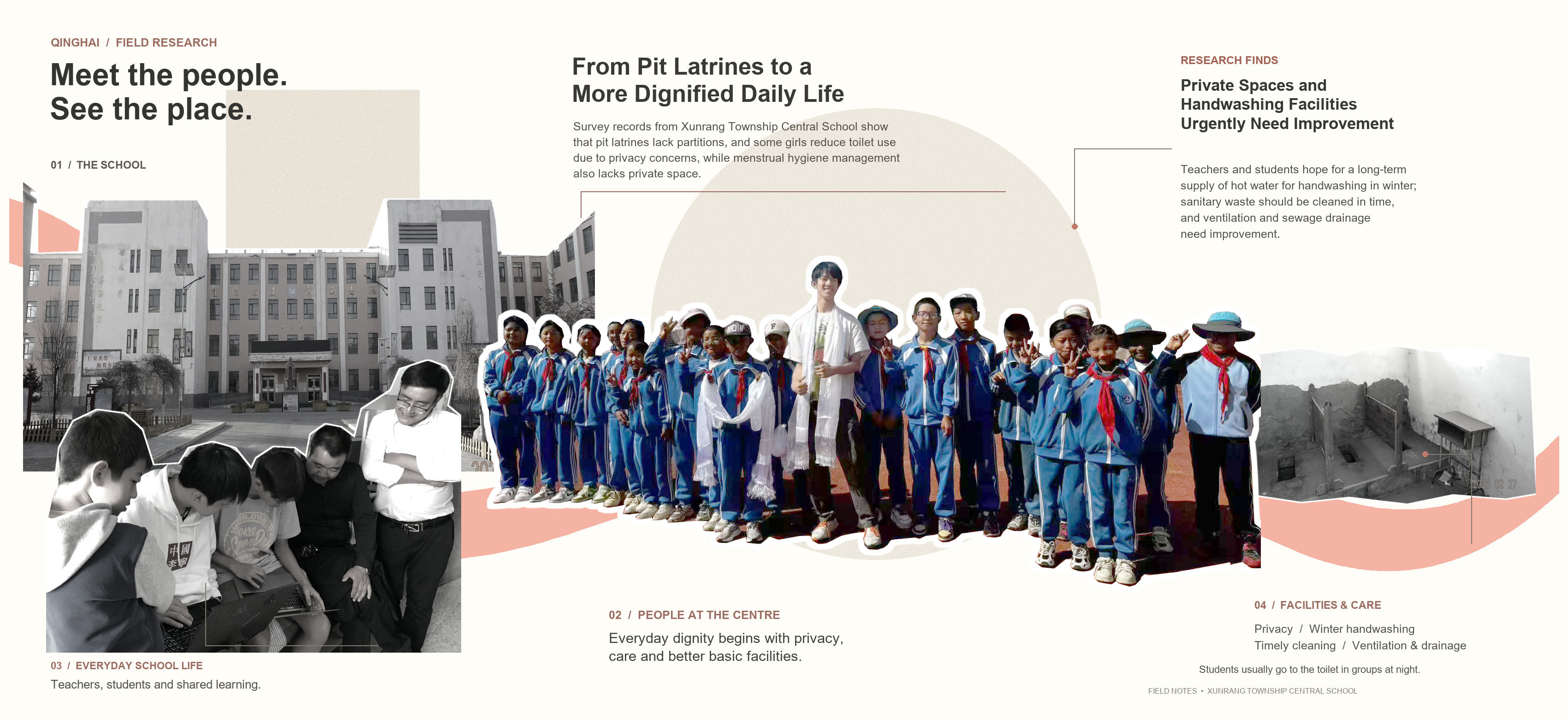
Xu rang Xiang Central School · School data & field interviews
Boys · 407Girls · 395
Unit: students. All bars use the same scale.
Hui, Salar and other ethnic groups were recorded as 0%.
99Boarders · 12.4%
701Day students · 87.6%
Based on 800 students in the accommodation section: boarders 42 boys / 57 girls; day students 363 boys / 338 girls.
Qualitative findings from the record and interviews; these are not survey percentages.
Unpartitioned pit latrines lead some girls to avoid using the toilet; private menstrual-care space is also lacking.
Female students and teachers want reliable warm water for handwashing in winter and better washing facilities.
Sanitary waste needs timely removal, alongside improvements to ventilation and sewage drainage.
Students usually visit in groups at night. One younger pupil’s parent raised concerns about wide gaps in the pit latrine.
Let everyday needs, the plateau climate and local memory shape the spaces we build.
Simple to use and easy to maintain.
Microbial treatment and settling; safe treatment and volume reduction.
Reduce water use and emptying frequency.
Enable beneficial reuse of recovered resources.
Lightweight and straightforward to install.
Consider outdoor toilet comfort during winter.
No exposed waste, fewer flies and less residue.
Insulate pipes and protect equipment against freezing through long, cold winters.
From the landscape to a place for everyday life.
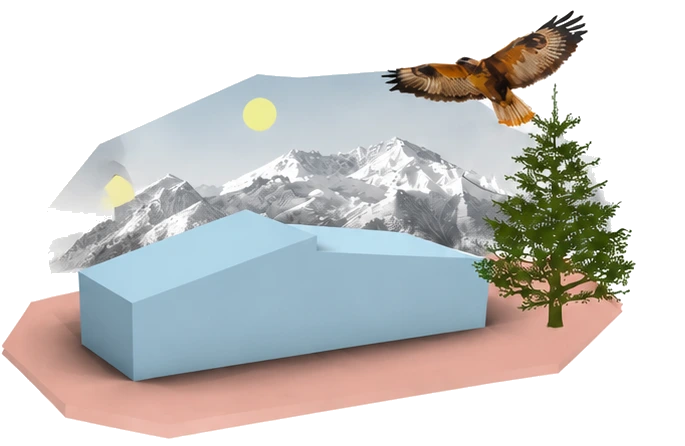
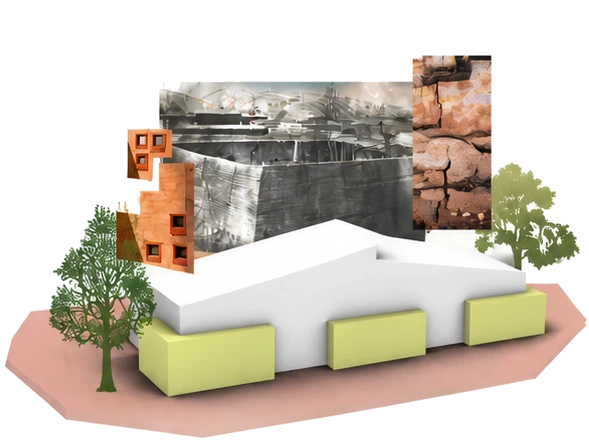
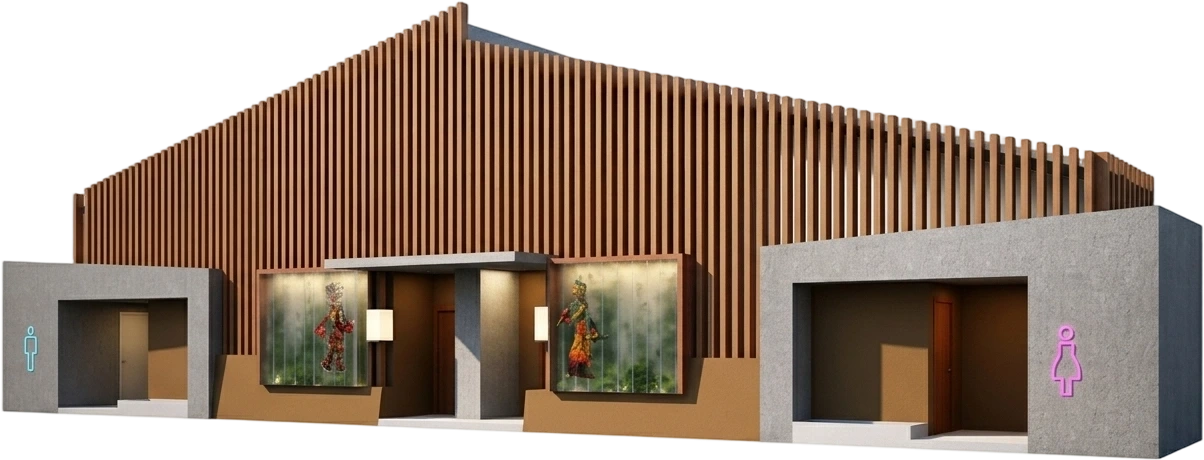




Overlapping plateau ridges become a rhythmic roofline.
Inward-facing spaces and thick walls create a quiet, sheltered place.
Hehuang shadow puppetry brings local cultural memory into everyday architectural details.
Cold- and drought-tolerant planting responds to the plateau climate.
Translucent panels and illuminated signs provide light and orientation.
One building, day and night
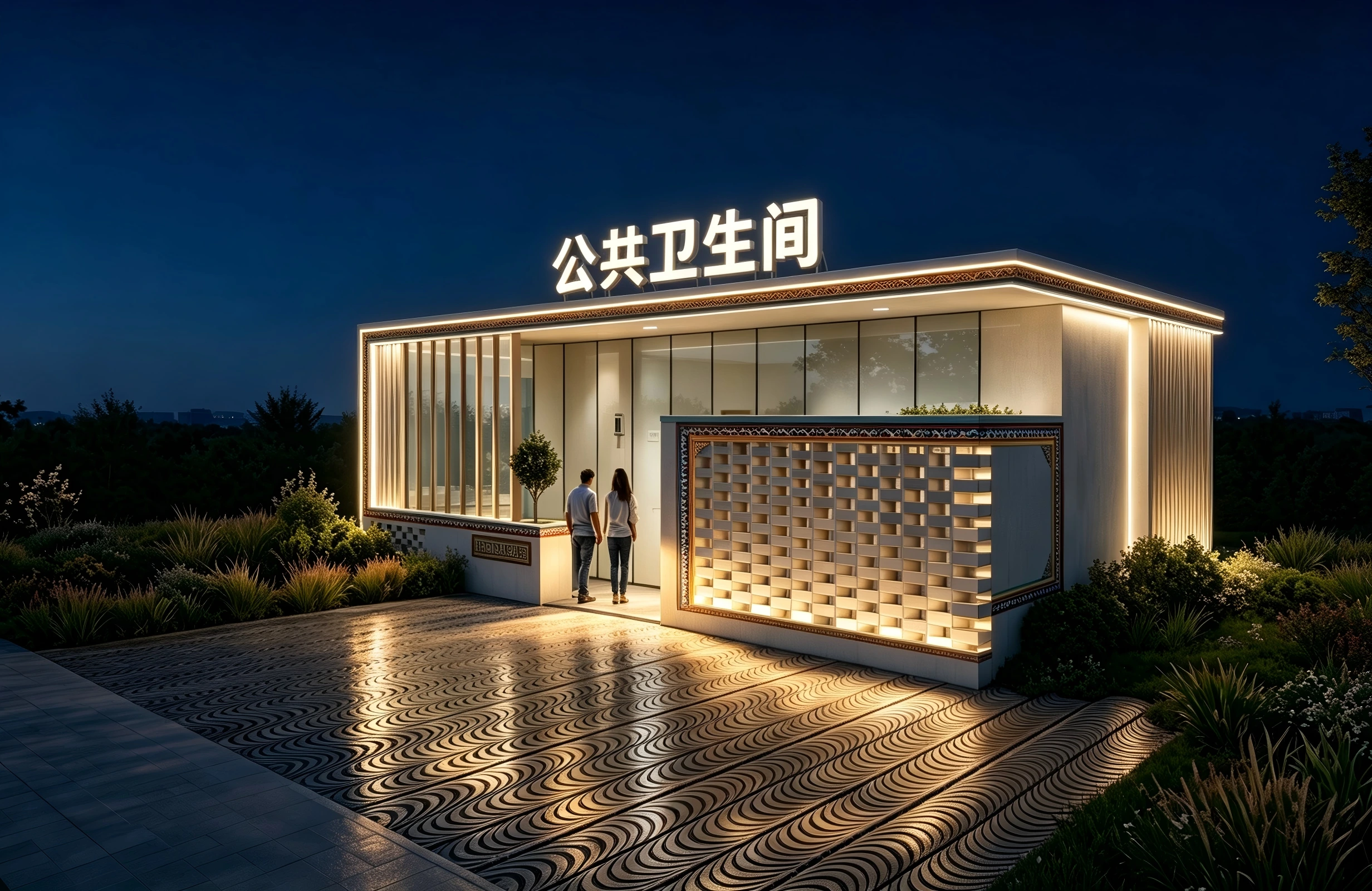
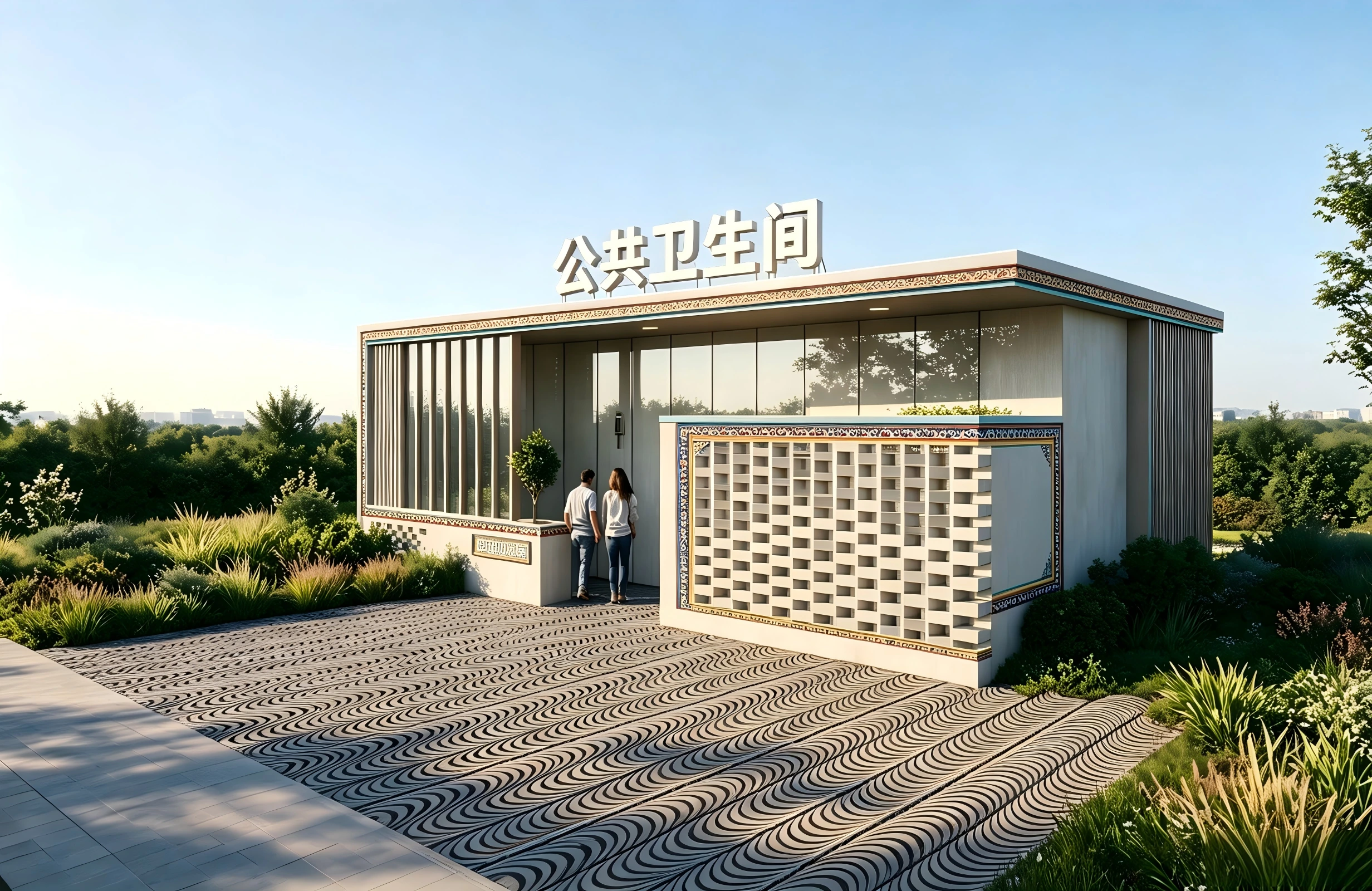 DAYNIGHT
Architecture · Structure · Floor plans

Architecture · Structure · Floor plans
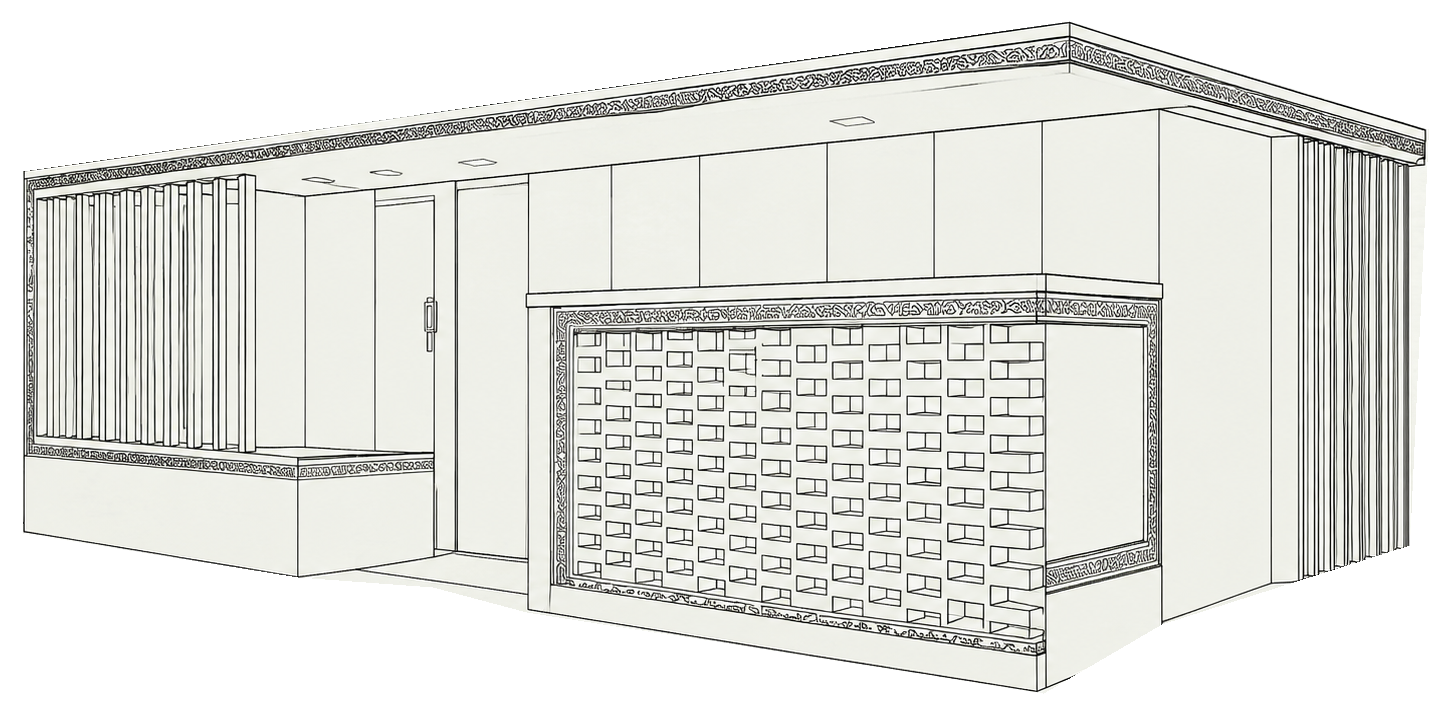
From sketches to prototypes, water saving to frost protection: explore the details that make a design work.
Start with the body. Sketches, paper mock-ups and posture studies explore how one toilet can accommodate different habits.
Bring the idea into a technical discussion. The meeting record and exploded view connect the proposed form with components and assembly.
Move from drawings to objects. Compare physical samples, components and workshop processes documented in the source.
No-water approach · Applied in Yangjiashan Village.
Keeps feces enclosed after use.
Exhaust airflow helps reduce odors in the toilet room.
Feces and urine follow separate collection and treatment routes.
Micro-flush approach · Applied in Jiajia Xiang School and Xu rang Xiang School.
Waterless urinals are paired with water-saving or vacuum toilets. Solar power is optional.
Urine enters a storage and fermentation tank; feces enter septic tanks for treatment. The diagram also shows washbasin drainage.
Urine recovery is optional. Collected material is transported for further treatment or use; fecal and urine storage tanks require regular emptying.
A three-stage approach: separate at source, treat each stream, and recover resources. The guide describes urine–feces separation, anaerobic fermentation and organic fertilizer return to farmland, saving over 90% of water and turning waste into agricultural resources.
Waterless urinals collect urine separately. Water-saving toilets use no more than 1 L per flush to move feces, while handwashing greywater is collected separately. Separation reduces wastewater at source and avoids the added treatment difficulty of mixing urine and feces.
Urine enters a static fermentation chamber for 30–60 days of stabilization to inactivate pathogens. Feces and greywater enter a three-stage septic tank for 20–40 days of anaerobic breakdown, producing nutrient-rich liquid digestate and stabilized solid digestate.
Fermented products are transported by specialist pump trucks to composting facilities for further processing into organic fertilizer, or returned directly to farmland and orchards. The guide describes a soil-to-soil cycle and a 30–50% reduction in chemical fertilizer use.
Rooftop distributed photovoltaics generate 2–5 kWh daily, paired with lithium iron phosphate battery storage. The guide describes 24-hour electricity supply for heating, mixing and monitoring, supporting off-grid operation without an external grid connection.
Treatment units are buried 1.2–1.5 m deep to use stable ground temperatures. XPS insulation and polyurethane foam surround the units, with a stated heat-transfer coefficient below 0.35 W/(m²·K). When pipe temperature drops below 5°C, 80–150 W electric heat tracing starts automatically. Stored energy is specified to provide more than 72 hours of power.
Small underground treatment units beneath the toilet extend the pump-out interval from 30 days to 120–180 days. Average transport distance falls from 15 km to within 3 km. The guide reports a reduction of more than 60% in annual operating costs and lower transport emissions.
Capture sunlight. Store energy. Deliver heat.
The rooftop panel supplies the integrated storage and inverter unit.
Stores electrical energy and supplies the heating devices and lighting.
Ratings shown in the source diagram. Actual equipment configuration depends on climate, operating time and site conditions.
Follow the work on site. Select a construction stage to watch.
Cleaning, checks, repairs and records keep everyday improvements going.
Daily cleaning, preventive checks and stock management, page by page.
For Grade 4 and above, assigned by a teacher. Tick each completed task and report abnormalities immediately.
Record week, date range and supervising teacher. Log each task Monday–Sunday, with the student's signature.
School maintenance staff check each item and record OK, action needed and notes.
Adapted from the Jiajia Primary School Toilet Maintenance Manual. English text is translated from the Chinese source. Full weekly tables, signature fields and stock logs are in the original PDF.
Original PDF (Chinese) ↗Download printable forms ↓How can care continue after construction? Yangjiashan links toilet cleaning and facility maintenance with a supermarket points scheme, connecting the upkeep of shared spaces to residents’ everyday lives.
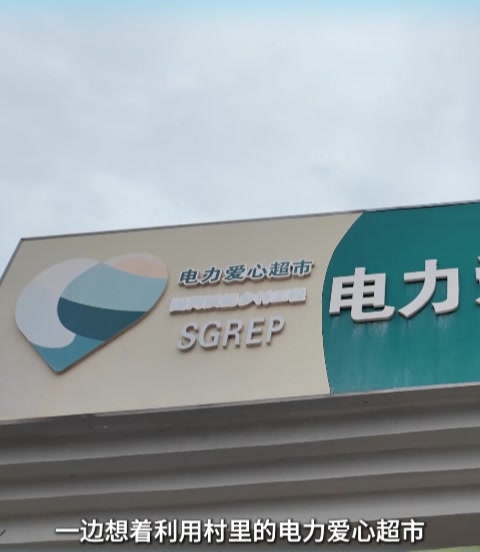
Residents take part in everyday care by cleaning toilets and maintaining facilities.
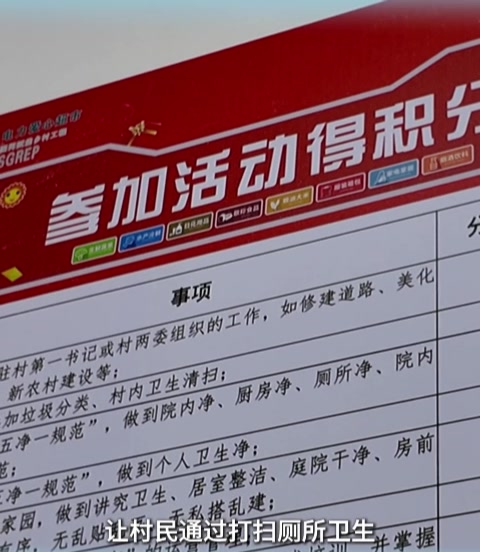
Cleaning and maintenance efforts connect to the village's activity points system.
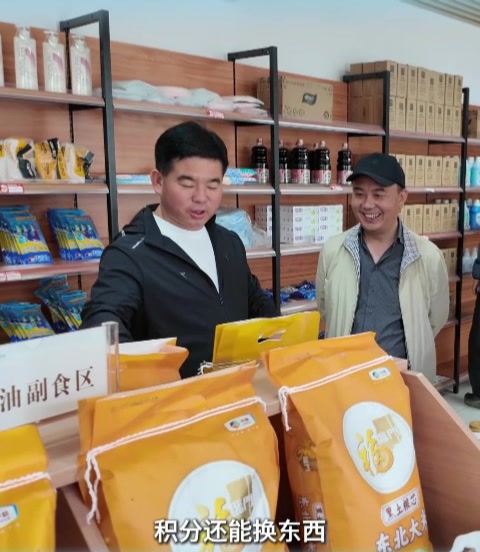
Accumulated points can be exchanged for goods at the charity supermarket, bringing practical benefits to everyday life.
Stills from the supplied video “October 10”, 02:56–03:02. Original Chinese subtitles retained.
From village points to school flowers: a noticeboard outside the toilets brings duties, records and encouragement together.
Original posting sheets · Click to read
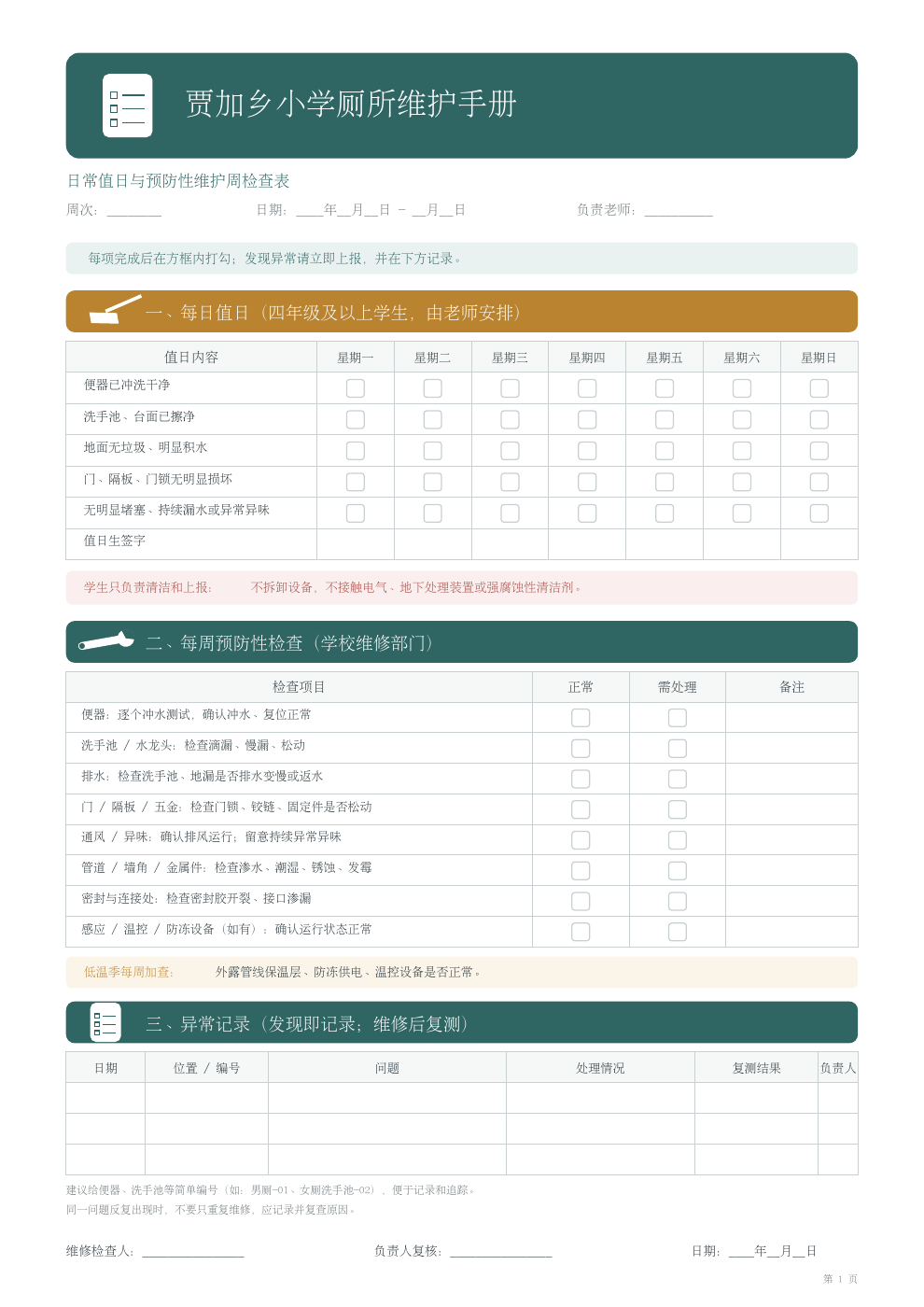
Assigned by a teacher to students in Grade 4 and above.
Complete duties → Teacher checks → Record a flower
The manual defines duties. The board makes them visible. Flowers recognize the effort.